
Craft
Outdoor Kitchen Stainless Steel Is a Grade, Not a Promise
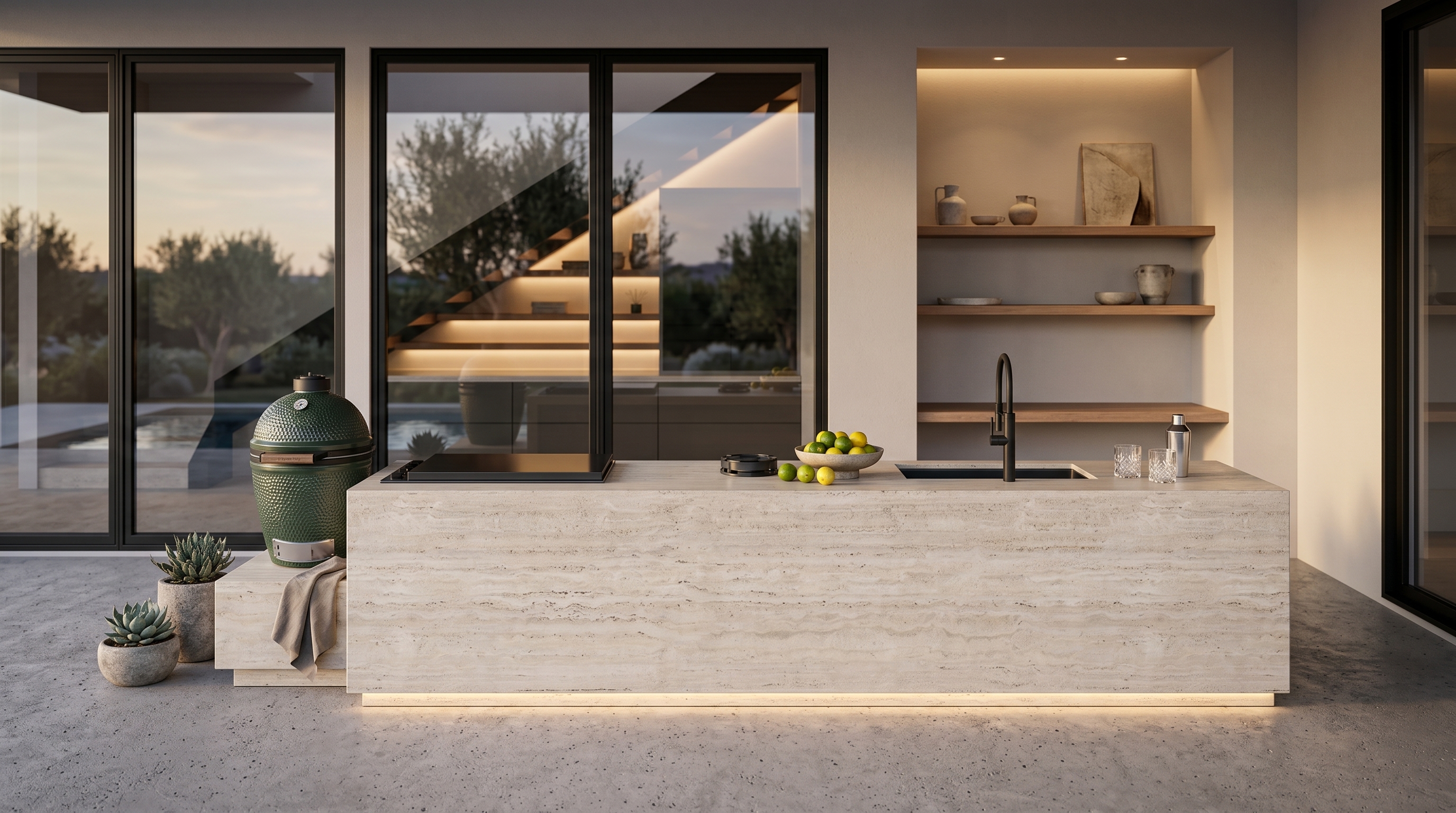
Outdoor kitchen stainless steel isn't one material. Grade decides whether it survives weather, and most spec sheets never say which one you're getting.
The word "stainless" carries more confidence than it has earned. It sits on outdoor kitchen brochures next to renderings of pergolas and pizza ovens as though it settles the weather question on its own. It doesn't. Stainless steel is not one material; it's a family of roughly 150 alloys, and the gap between the cheapest member of that family and the one built for a coastline is the gap between a kitchen that still looks new in year ten and one that's freckled with rust by year three.
Most buyers never ask which stainless steel they're getting. Most showrooms never volunteer it. The spec sheet says "stainless steel construction" and stops there, and that omission does a lot of quiet work, because grade, not finish, is what decides whether an outdoor kitchen behaves like one.
Two Stainless Steel Families, One Marketing Word
Stainless used in outdoor kitchens splits into two broad families. Austenitic grades, the 300 series that includes 304 and 316, typically run 16 to 28 percent chromium with several percent nickel; 304 is often called "18-8" for its roughly 18 percent chromium, 8 percent nickel mix, according to the Specialty Steel Industry of North America. Ferritic grades, the 400 series that includes 430, carry chromium but no nickel at all, and the same source rates their corrosion resistance as merely "good," against "excellent" for the austenitic family.
That's not a cosmetic distinction. Nickel is what gives 300-series steel its non-magnetic structure and its long-term stability outdoors. Grade 430 is magnetic, cheaper to produce, and shows up constantly in outdoor kitchen cabinetry for exactly that reason, while still qualifying, technically, as "stainless steel" on a spec sheet.
Grade Decides What Happens in Year Five
The gap widens once salt or chlorine enters the picture. Grade 316 adds molybdenum specifically to resist chloride attack, the kind of corrosion caused by pool splash, de-icing salt, or coastal air, which is why marine hardware defaults to it. Grade 304 holds up reasonably well inland with regular cleaning, but 430 has no such defense: without nickel or molybdenum, it's the grade most likely to spot, pit, or rust within a few seasons outdoors, especially within a few miles of the ocean or a chlorinated pool.
A magnet is a better lie detector than a spec sheet. Ferritic steel is magnetic; true 300-series austenitic steel, in its normal annealed state, is not.
We've made a version of this argument before about what actually keeps an outdoor kitchen dry: drainage does the real work, not the sealant. Grade is the same kind of hidden variable. It's invisible until the day it fails.
Why the Cheaper Grade Keeps Winning
No regulation requires an outdoor kitchen manufacturer to disclose which stainless grade sits behind the cabinet door, and 430 costs meaningfully less to source than 304 or 316. Outdoor kitchens are now a standard line item in high-end renovation budgets rather than a novelty, and that price gap is an easy place to cut without changing a word of the marketing copy. The kitchen still gets called stainless. It just doesn't get called by its grade.
Run the Test Before You Sign
Bring a refrigerator magnet to the showroom. Hold it to the cabinet doors, the drawer fronts, and the appliance panels. A strong, confident pull usually means ferritic steel, likely 430, which is worth knowing before it goes outside a house rather than after. A weak pull or none at all points toward 300-series steel, though it's still worth asking the dealer to confirm the exact grade in writing, ideally with a mill certification rather than a verbal assurance. If the kitchen sits within a few miles of salt water or wraps around a pool, ask specifically for 316, not just "marine grade," a term with no fixed legal definition, and get the grade number itself on the invoice.
None of this requires expertise. It requires one question most people never think to ask, and thirty seconds with a magnet that's probably already on their own refrigerator.
Book a Private Showroom Tour
If this changed how you're thinking about the outdoor kitchen you're planning, the next step isn't another spec sheet. It's an hour with a design team that works in outdoor kitchens built to a stated standard, not just a finish. Book a private tour at your nearest of BauTeam's eight showrooms and see the grade stamp for yourself, one on one with a design consultant. Reserve your visit.