
Craft
Outdoor Kitchen Refrigerators Aren't Indoor Ones in Disguise
The outdoor kitchen refrigerator is chosen last and fails first. Why an indoor rating won't survive a sunny patio, and where to place the unit instead.
The outdoor kitchen refrigerator is usually the last thing anyone chooses. The grill gets the budget, the stone gets the opinions, and the fridge is whatever stainless box fits the cutout. That order is backwards, and it is why the refrigerator is so often the first appliance on a patio to give up.
The conventional wisdom is that a refrigerator is a refrigerator: pick a finish that matches, slide it in, plug it in. The better view is that an outdoor kitchen refrigerator is a different machine solving a different problem, and that where you put it matters as much as what you buy.
An Indoor Refrigerator Is Rated for a Room
Every household refrigerator assumes a climate-controlled house around it. GE's installation guidance, for one, advises against installing a refrigerator where temperatures exceed 110°F, because above that the compressor oil can overheat and break down, which may damage the compressor or sealed system. It draws the lower line too: below 60°F efficiency falls, and near freezing cooling can stop altogether.
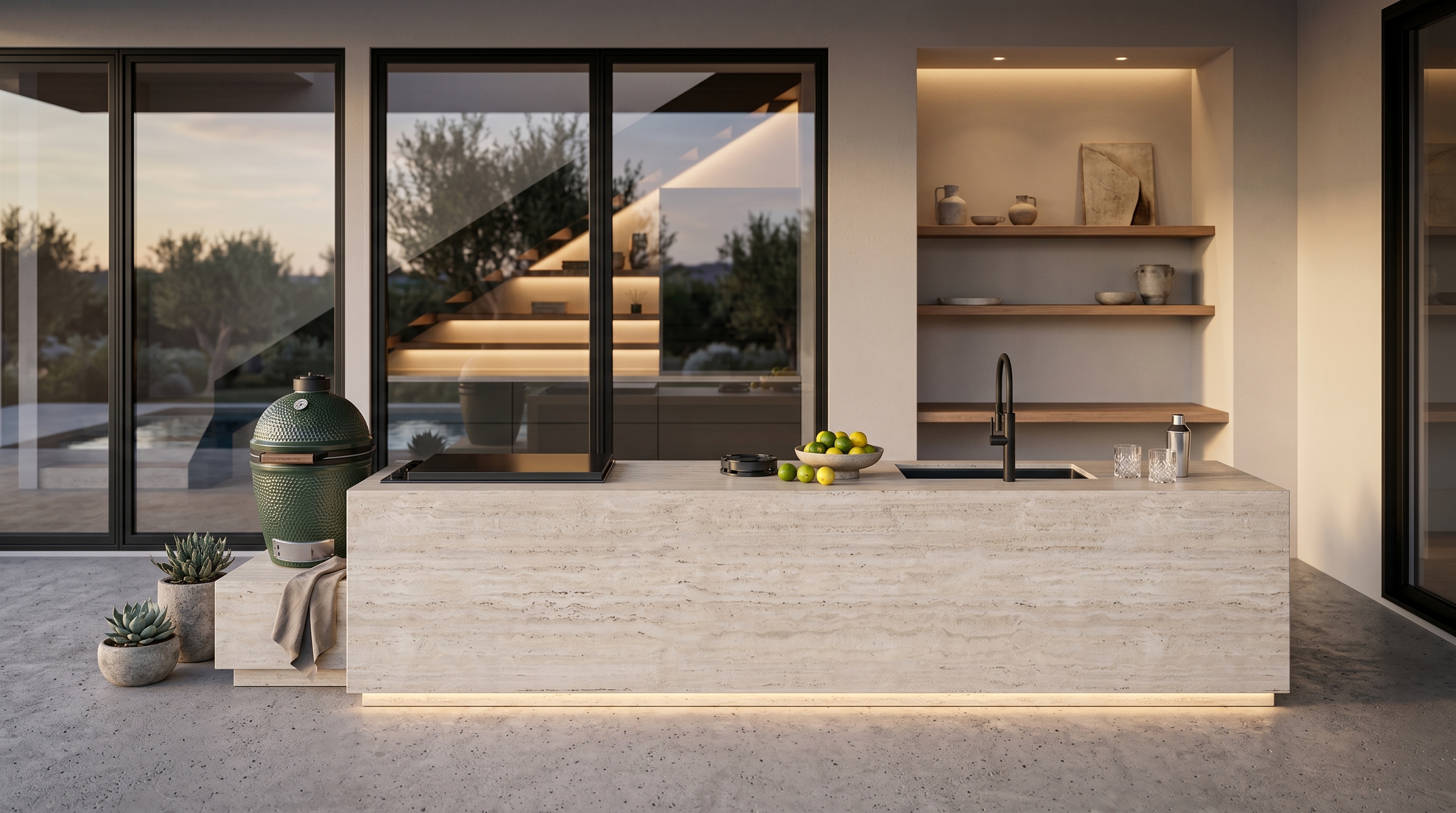
Now picture a built-in cutout on a sunny patio in August, boxed in by cabinetry on three sides and six feet from a grill. The air around that appliance is not the air a weather report describes. Even before the cooking starts, you have asked a machine built for a pantry to work inside a heat trap.
Shade Is a Spec, Not a Nicety
The U.S. Department of Energy's guide to kitchen appliances offers advice so plain it is easy to skip: position refrigerators away from heat sources such as ovens, dishwashers, and direct sunlight, and leave a few inches between the wall and the back of the unit. Indoors, that is a tip. Outdoors, it is the whole design brief. Sun, a grill, and a sealed cutout break all three rules at once.
The refrigerator is the only appliance in an outdoor kitchen that has to work all day, in the worst hour of the afternoon, whether or not anyone is cooking. A grill can sit cold for a week. A compressor cannot.
Choose the Machine, Then Draw the Kitchen Around It
This is the argument for starting with the refrigerator rather than ending with it. Choose a unit the manufacturer explicitly rates for outdoor installation, and read the temperature range in the installation manual rather than the brochure. Then give it a place in the plan: the shaded end of the run, away from the cooking zone, with the ventilation the manual specifies and a cabinet that lets heat leave rather than collect. The same logic runs through the rest of the kitchen, which is why an outdoor kitchen is better planned as a climate problem than as a row of finishes.
Walk the Patio at Three in the Afternoon
Before anything is ordered, stand where the refrigerator will go at the hottest, brightest hour of a summer day. Note whether the sun reaches that spot, how far it sits from the grill, and where the hot air from the back of the unit will go. If you would not leave a carton of milk there, do not leave a compressor there. Move the refrigerator to the shade, even if that shifts the sink or breaks the symmetry. A lopsided kitchen that works beats a handsome one that warms the wine.
An outdoor kitchen is judged by what is still cold at the end of the party. Plan for that, and the finishes can take care of themselves.
Book a Private Showroom Tour
If this changed how you're thinking about your outdoor kitchen, the next step isn't another spec sheet. It's an hour with our design team, one on one, working out where each appliance belongs before anything is built. Book a private tour at your nearest of BauTeam's eight showrooms and reserve your visit.