Craft
The Kitchen Is Not a Room — It's a System
Architects shape space. Kitchens demand something different — a system engineered around how a household actually moves, cooks, and lives.
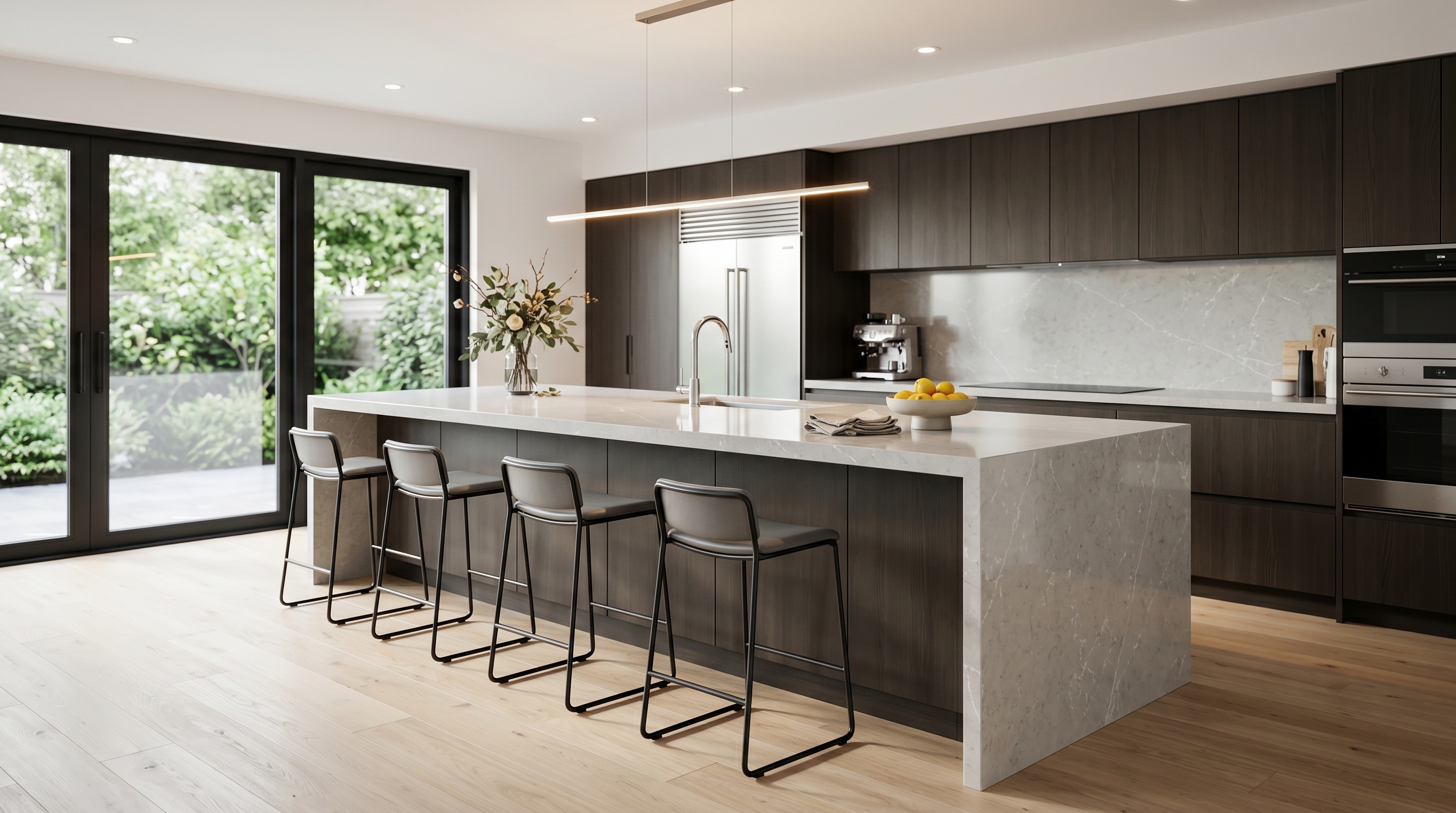
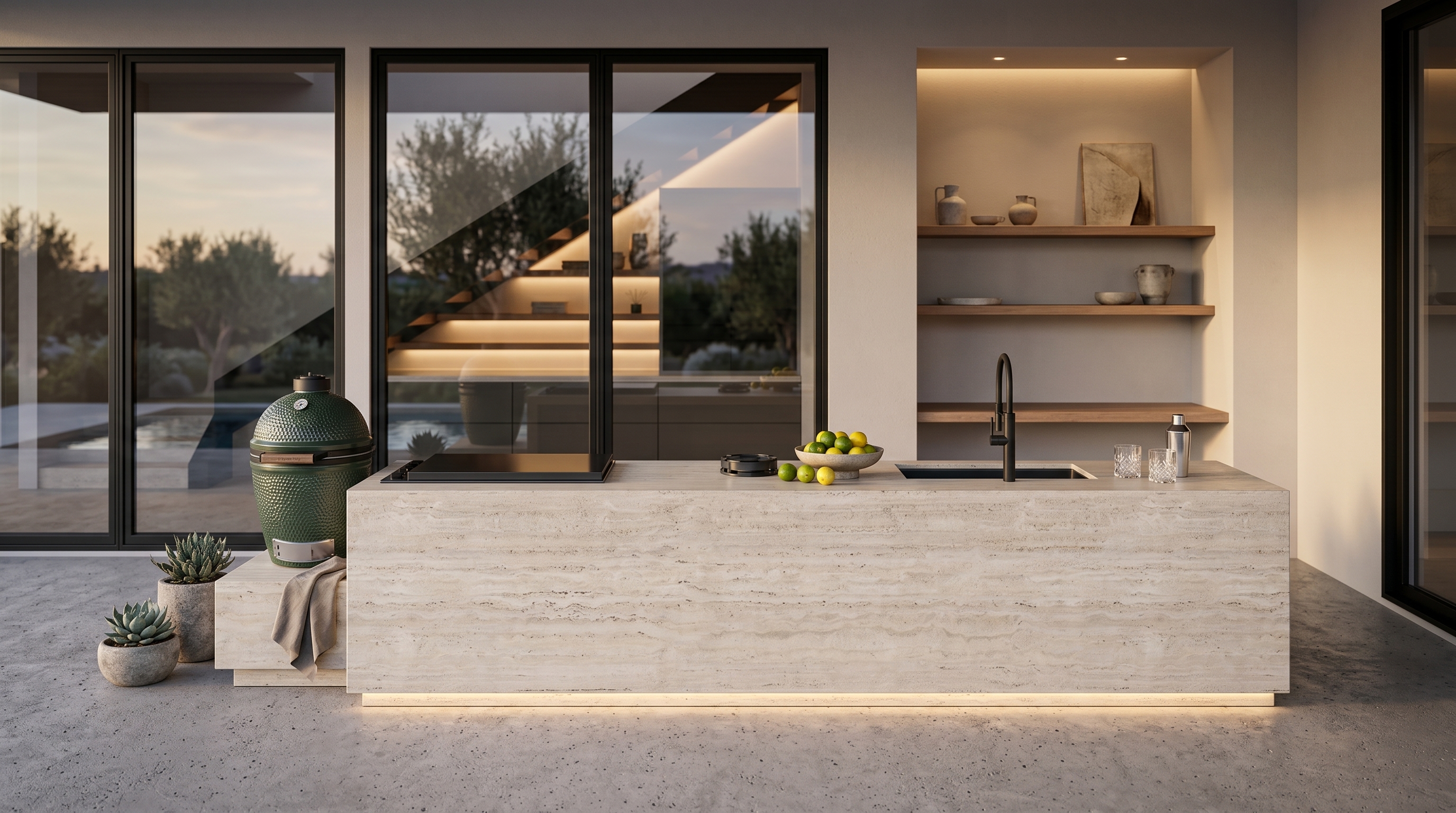
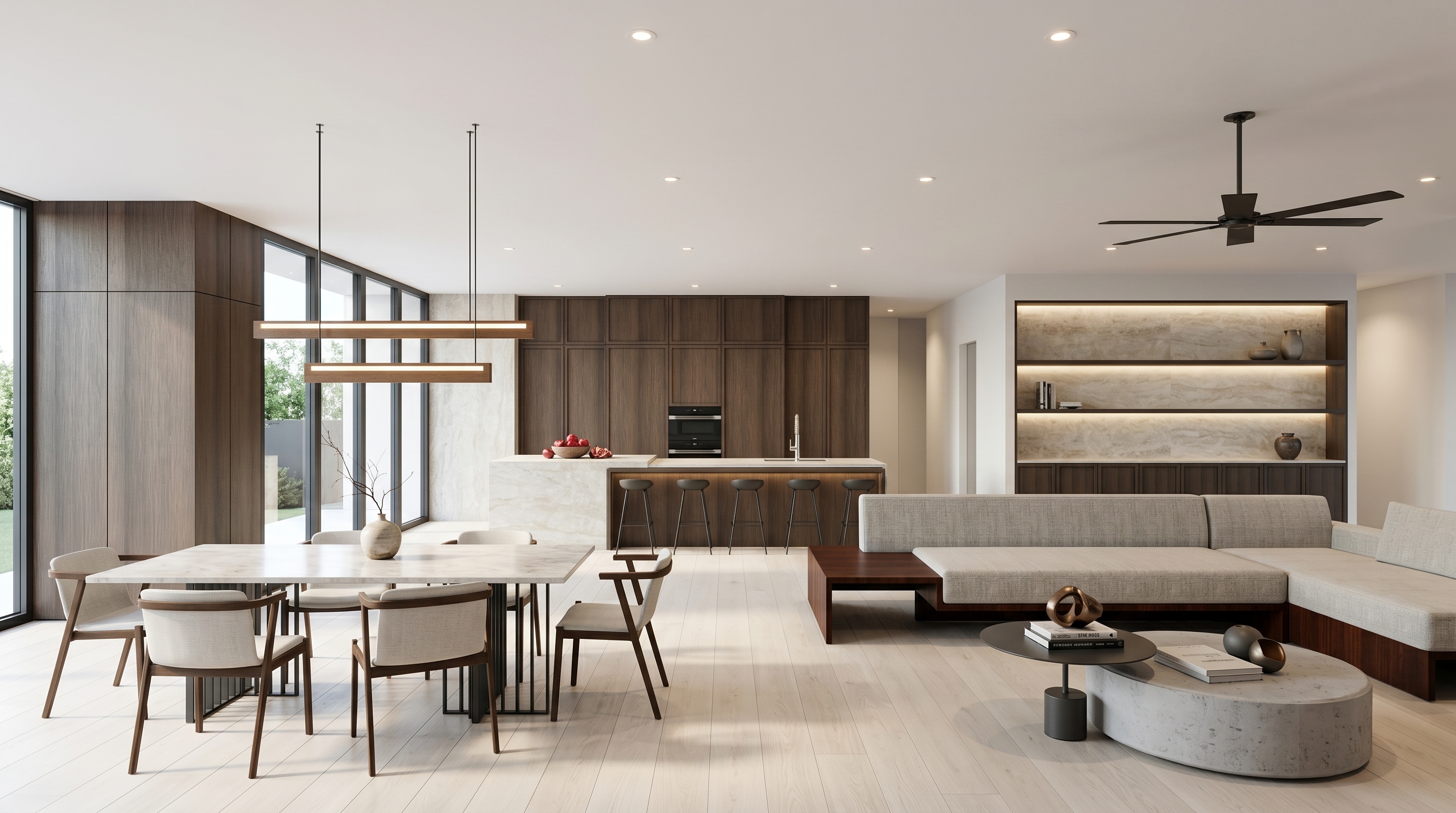
Walk into a kitchen designed by a great architect and the first impression is almost always the same: it photographs beautifully. The lines are clean. The proportions are correct. The materials are restrained. And then you try to cook in it.
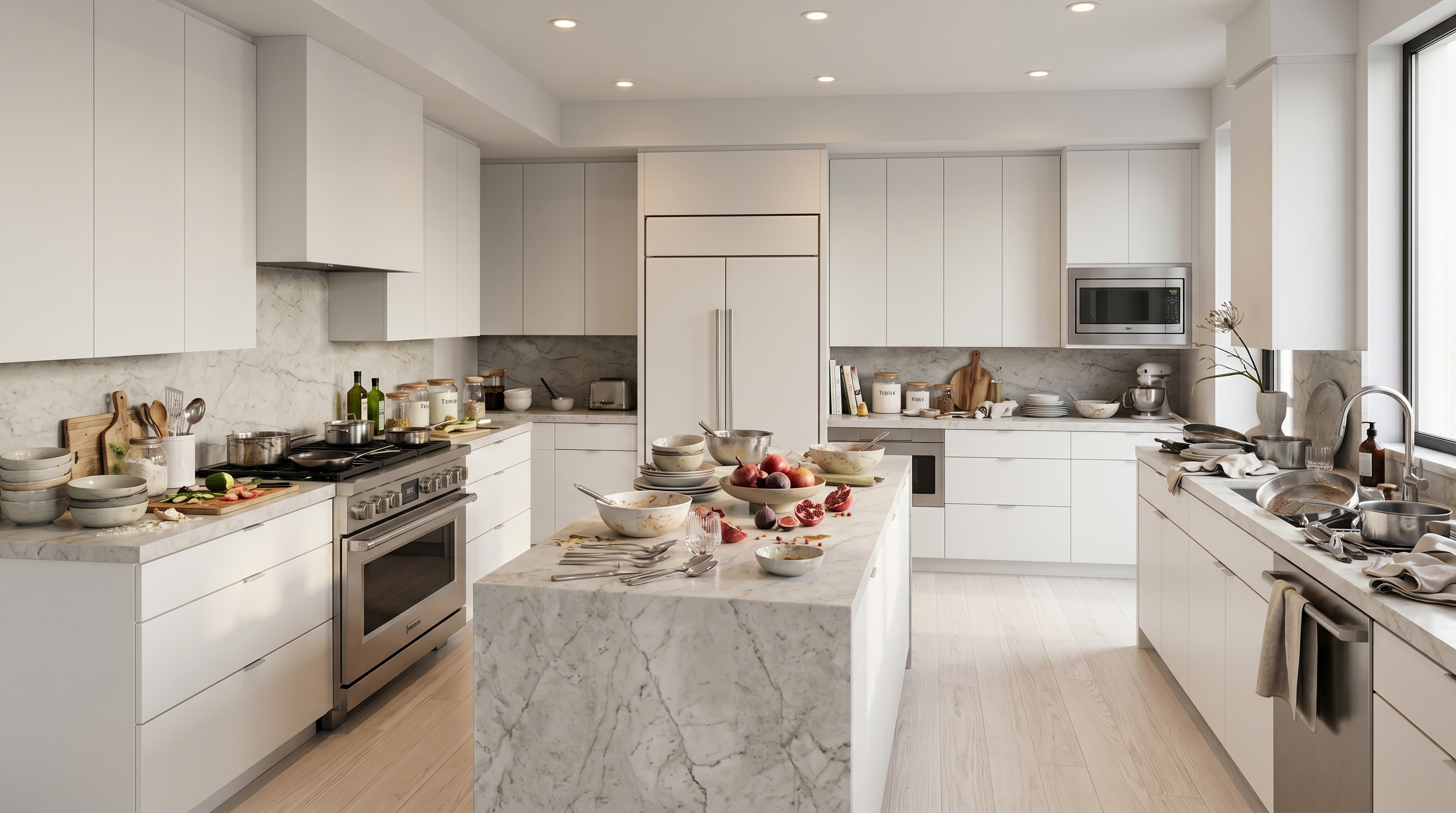
The dishwasher opens into the path of the refrigerator. The trash pull-out lives three steps from the prep zone. The drawer beside the cooktop holds nothing useful, because nothing useful fits the cavity left over after the structural island was set. The kitchen looks resolved on a plan and unresolved in life.
This is not a failure of taste. It is a failure of category. A kitchen is not a room. It is a system — and systems are designed differently than spaces.
Architects design the envelope. Kitchens demand the contents.
Architecture, at its best, is the discipline of shaping space — light, volume, sequence, proportion. These are the right tools for a living room or a stair hall, where the function is loose and the architecture itself is the experience.
A kitchen inverts that relationship. The function is precise, repetitive, and physical. It happens in three dimensions at every hour of the day. The architecture is the backdrop; the workflow is the experience. When a kitchen is designed from the outside in — envelope first, contents last — the result is a room that performs like an afterthought because, in design sequence, it was.
A kitchen that has been planned around how a household actually moves is felt before it is seen.
The hardware is the design
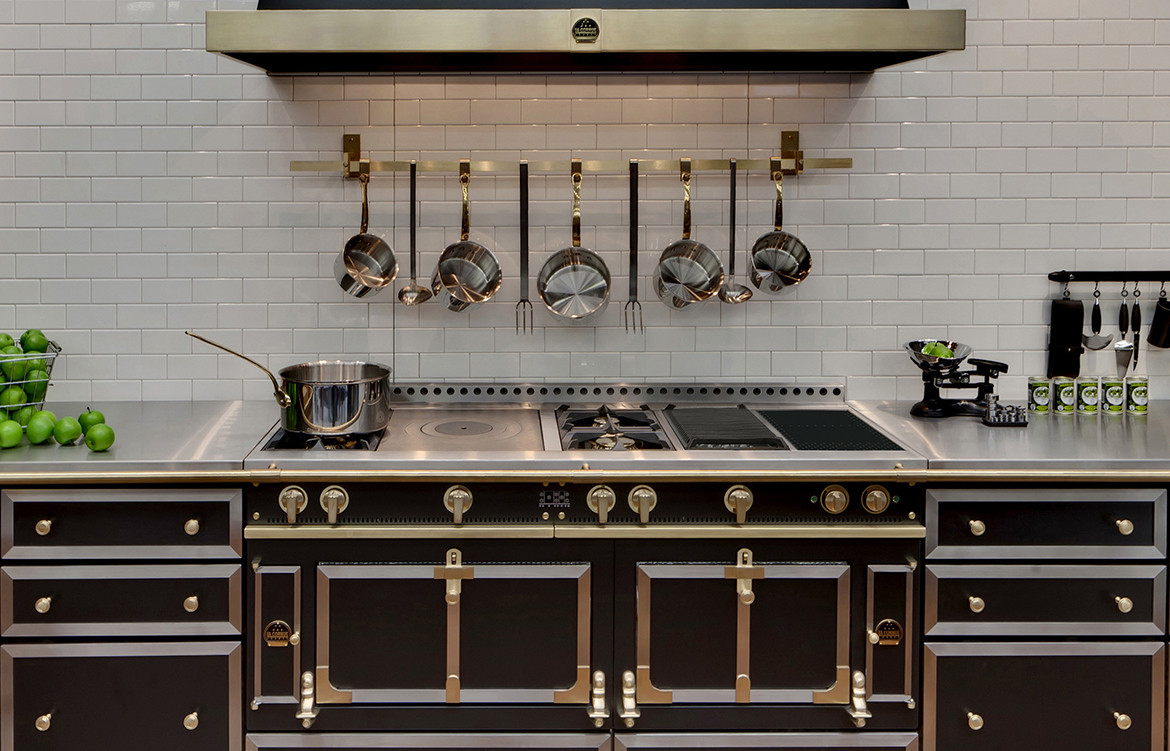
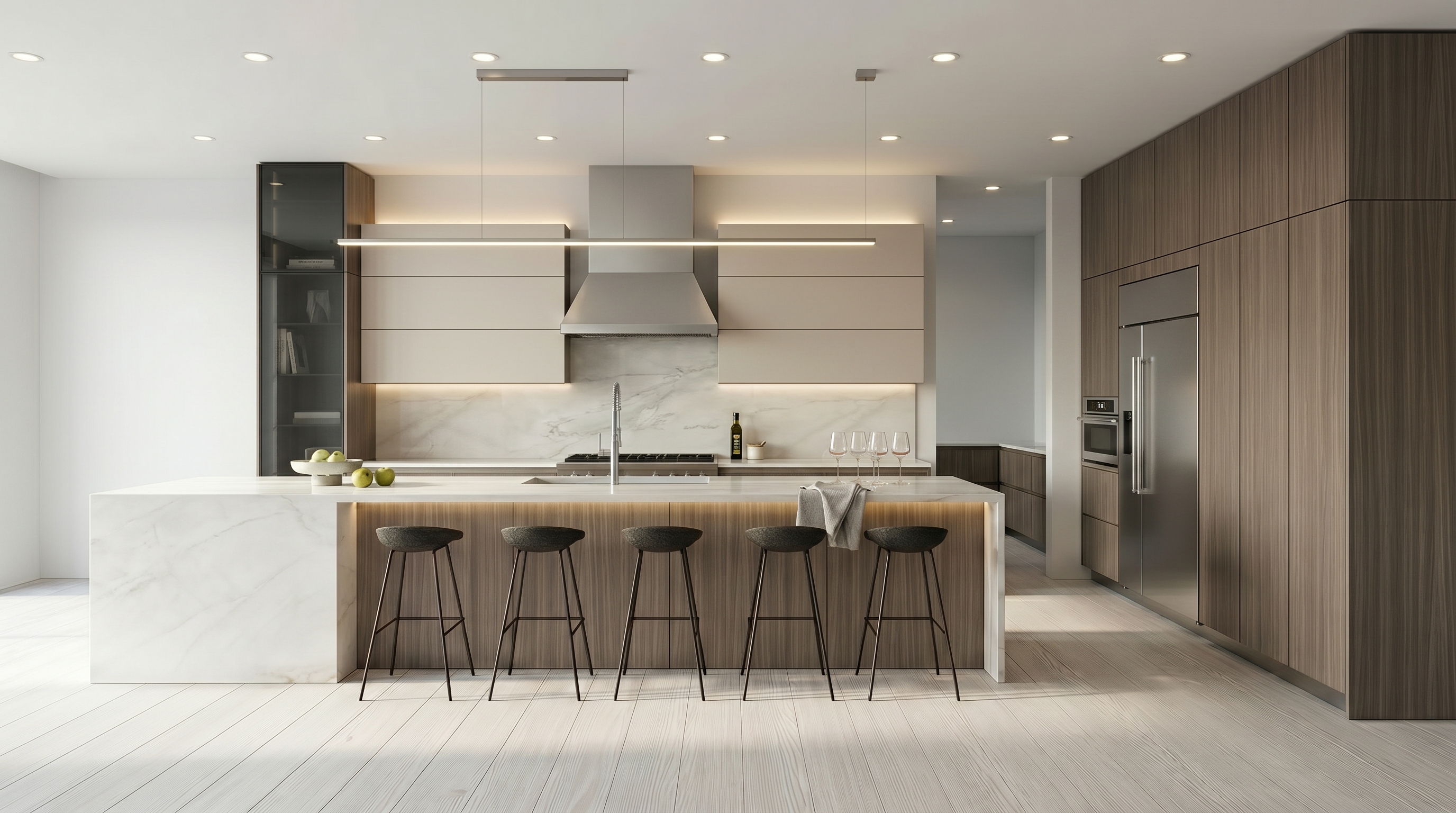
The visible kitchen is roughly ten percent of the kitchen. The other ninety percent is hardware — runners, hinges, lifts, dampers, internal organization, ventilation, structural reinforcement behind every cabinet face. None of it shows on an elevation. All of it determines whether the kitchen still functions in year fifteen.
This is where the architect's drawing set and the kitchen specialist's specification diverge. An elevation can call for a tall pantry pull-out without specifying the runner system that has to carry sixty kilos at full extension without sag. A floor plan can show a corner cabinet without resolving how the contents are reached. A rendering can show a handleless front without committing to the push-to-open mechanism, the gap tolerance, the seasonal expansion of the material. These are not aesthetic details. They are the kitchen.
Workflow before footprint
The German approach — and ours — starts with a different first question. Not where does the island go, but where do the hands go. Where is the cook standing during the most-used twenty minutes of the day? What does that cook reach for, in what order, and what is the path from cold storage to prep to heat to plate to clean? The footprint follows from the answer. The architecture accommodates it.
This sequence is the opposite of how most kitchens are drawn. It is also the reason a well-engineered kitchen feels effortless to use and a beautifully drawn one often does not.
The collaboration that works
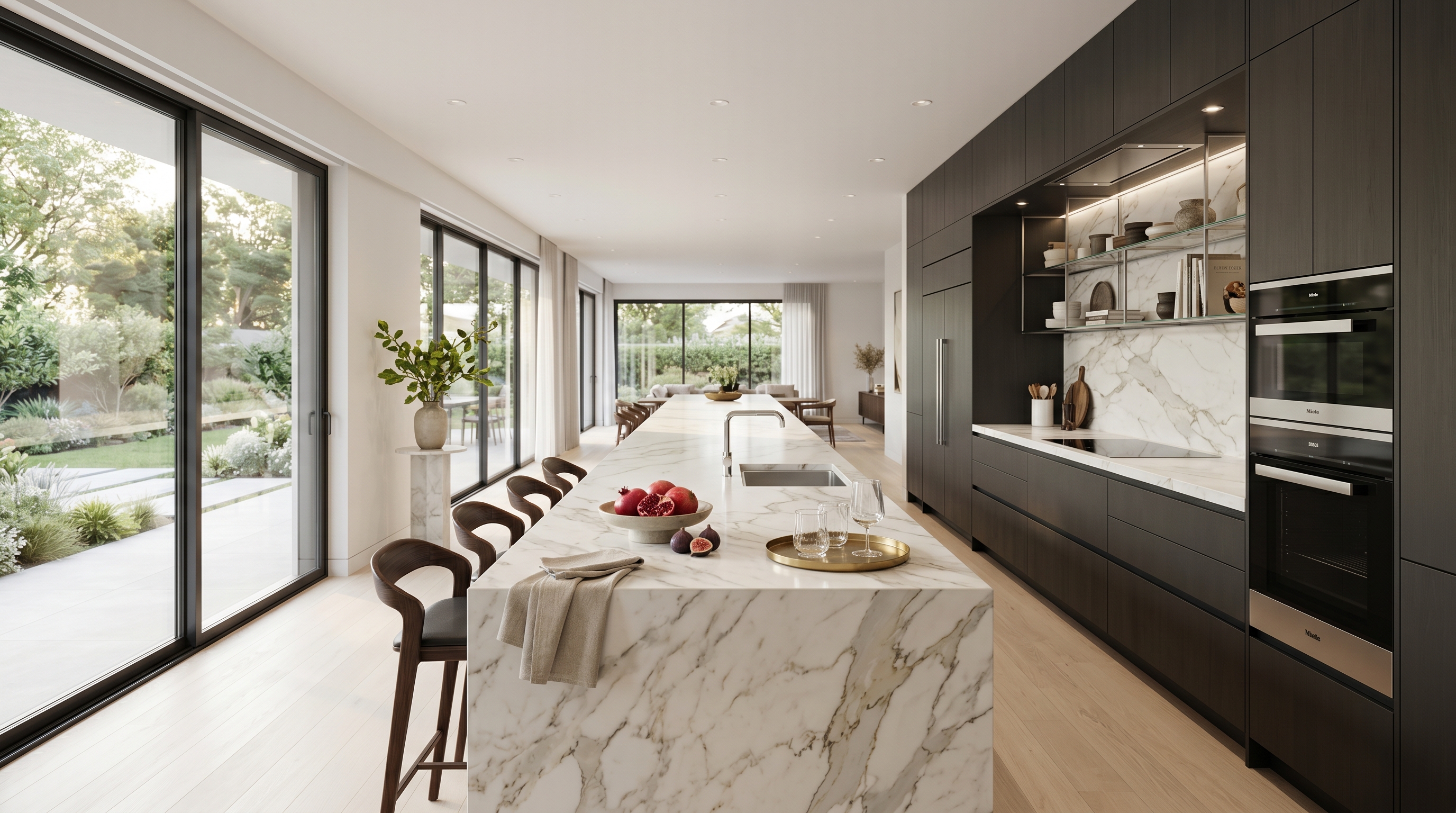
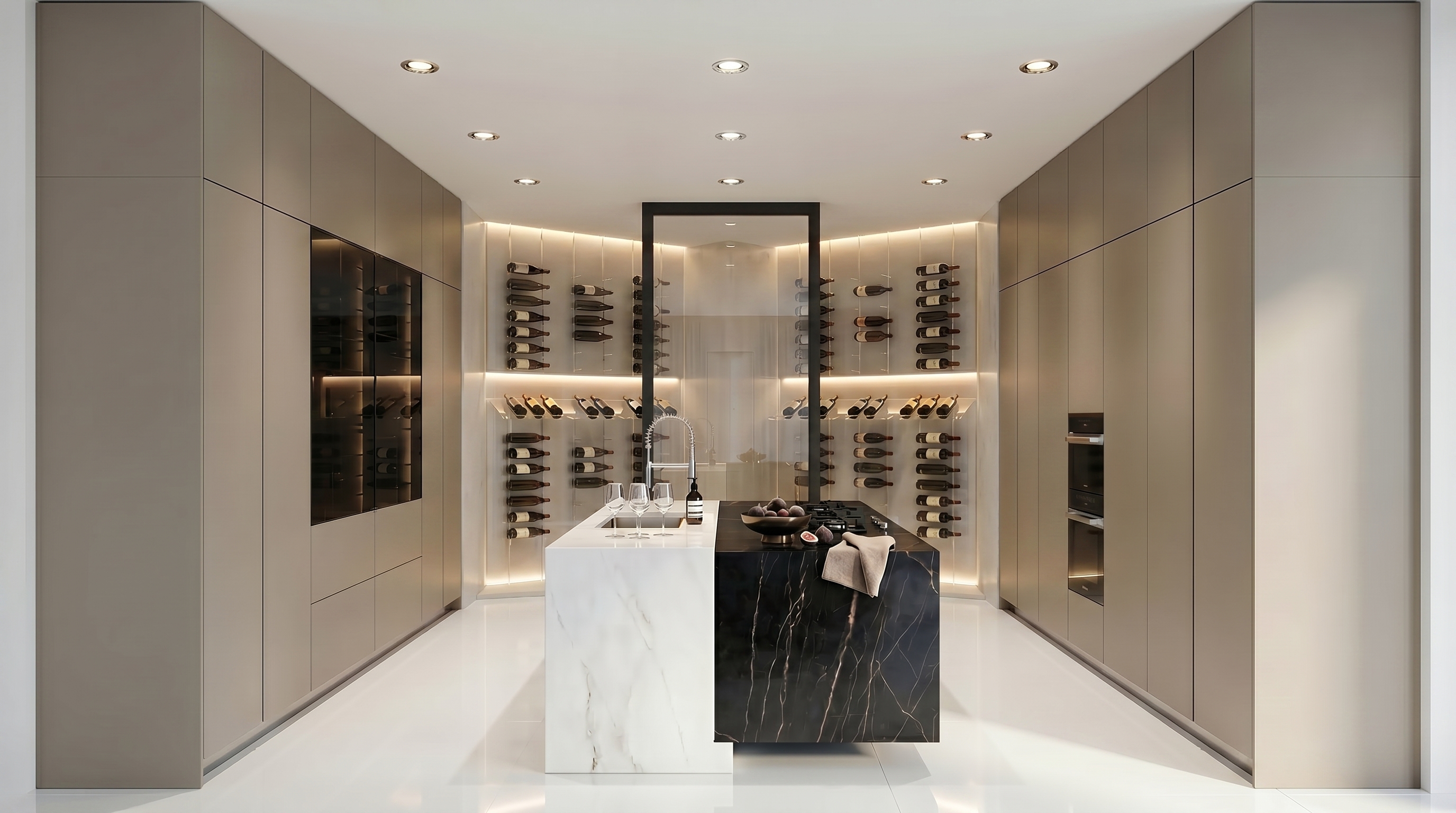
None of this is an argument against architects. The best kitchens are almost always the product of a real collaboration — an architect who shapes the room and a kitchen specialist who engineers what fills it. The trouble starts when one discipline is asked to do both, and the system loses to the space.
A kitchen rewards specificity the way a watch movement does. The closer you look, the more decisions you find. Make those decisions early, make them with someone who makes only kitchens, and the room becomes something rarer than a beautiful photograph. It becomes a tool that disappears into the life you use it for.
See the system up close.
The difference between a kitchen that performs and one that photographs is best understood in person — hands on the hardware, eyes on the tolerances. Book a private studio tour for an unhurried conversation with a BauTeam design consultant.