
Craft
Your Closet Lighting Is the Wrong Color
The warm, cozy glow sold as luxury closet lighting fails the one job a closet has: showing your clothes' true color. Here's what to install instead.
The most expensive closets tend to get one thing wrong, and it is rarely the joinery or the leather-lined drawers. It is the light. Closet lighting is almost always specified for mood — a low, golden glow borrowed from the living room — when the closet has one job the rest of the house does not: telling you the truth about color.
A dressing room is not a lounge. It is the single place where you make a color decision every morning, usually in a hurry, and then walk out into daylight to be seen. Warm, atmospheric light is built to flatter the room. It is not built to tell you whether the navy jacket actually reads navy.
The closet is a workspace, not a lounge
The reflex to bathe a dressing area in warm light comes from a real design truth: low color temperatures make skin, wood, and stone look inviting. But that instinct is imported from rooms meant for relaxing. In a closet you are performing a visual task — matching, coordinating, discriminating between two dark neutrals that may or may not belong together.
Retailers worked this out a long time ago. The reason a good fitting room feels clarifying rather than cozy is that it is lit like a workspace, with clean, consistent, color-accurate light aimed at the merchandise. Your closet is a private fitting room. It deserves the same honesty.
Two numbers decide whether your closet lighting tells the truth
Lighting is sold on wattage and warmth, but the two specifications that actually matter here are color rendering and color temperature — and they are independent of each other.
Color rendering is measured by the Color Rendering Index, a 0-to-100 scale maintained by the International Commission on Illumination. It describes how faithfully a light reveals color against a reference source. Daylight sits at roughly 100. Anything rated 90 or above is considered suitable for tasks that demand accurate color judgment. A great deal of recessed lighting lands well below that, and no one ever checks.
Color temperature, measured in Kelvin, is the separate question of warm versus cool: around 2700K reads yellow and cozy, while 4000K and up reads neutral and daylight-like. Here is the part most people miss — a bulb can be warm and still render color beautifully, or cool and render it terribly. Choosing a light because it looks warm tells you nothing about whether it tells the truth.
Why your black and navy betray you
There is a name for the specific failure a closet invites: metamerism. It is what happens when two colors match under one light and separate under another. The textbook example is a pair of socks that look identically black under household lamps, then reveal themselves as one black and one navy the moment you step outside.
The mechanism is straightforward. Warm household light is heavy in the red end of the spectrum; daylight peaks in the blue. Dark, near-neutral, multi-pigment colors — charcoal, navy, aubergine, forest — are the most vulnerable of all, because they are built from several dyes that respond differently to each source. A warm, dim closet is precisely the condition engineered to hide the difference until it is too late to change.
What to actually install
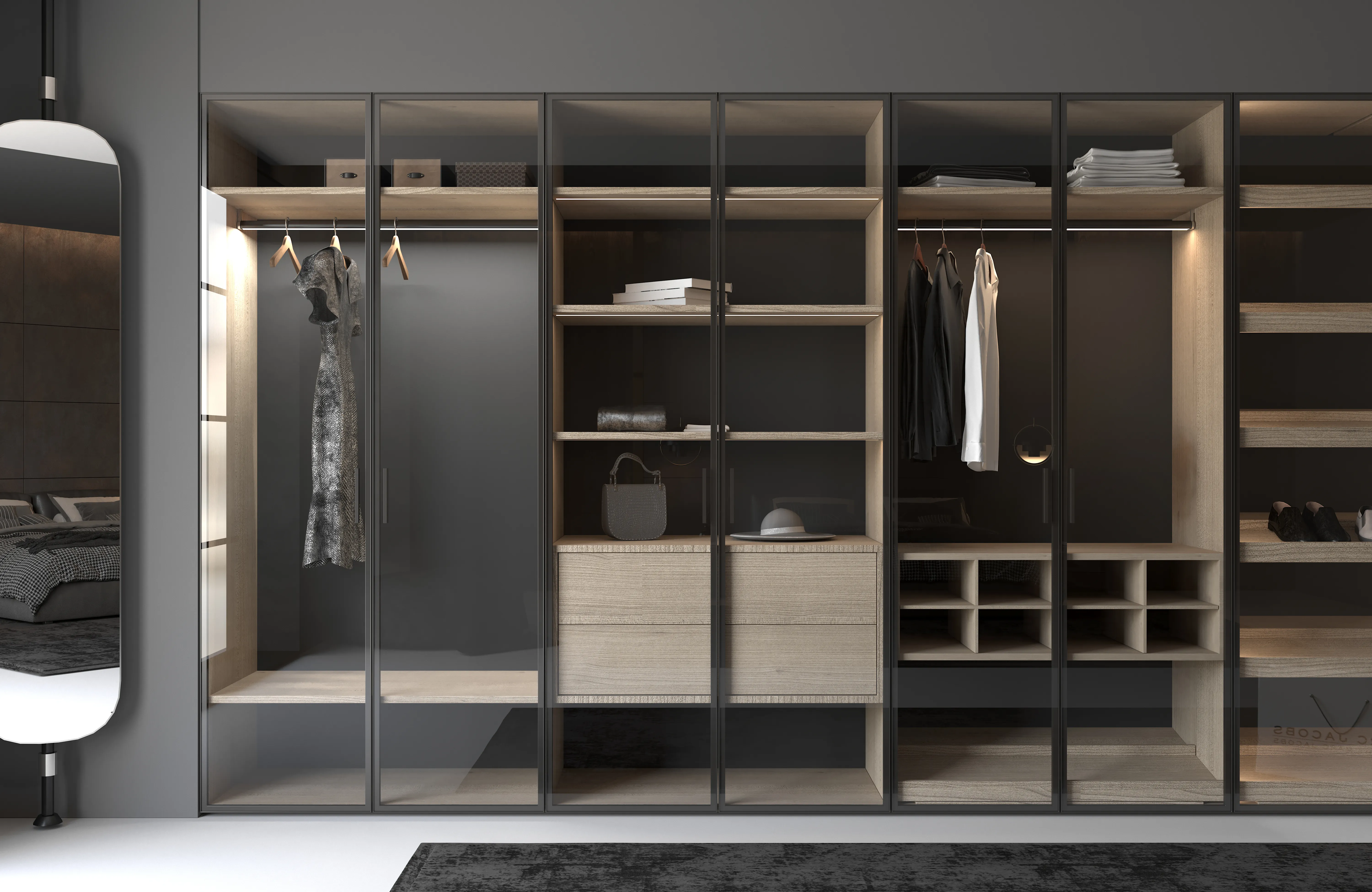
Specify a high-CRI light — 90 or above — at a neutral color temperature in the range of 3500K to 4000K, so the closet behaves like north-facing daylight rather than a hotel bar. Put that light where the clothes are: vertical illumination inside the cabinetry and along hanging rails, not a single ceiling downlight fighting your own shadow. Keep the source consistent throughout, so you are never judging one garment against another under two different lights.
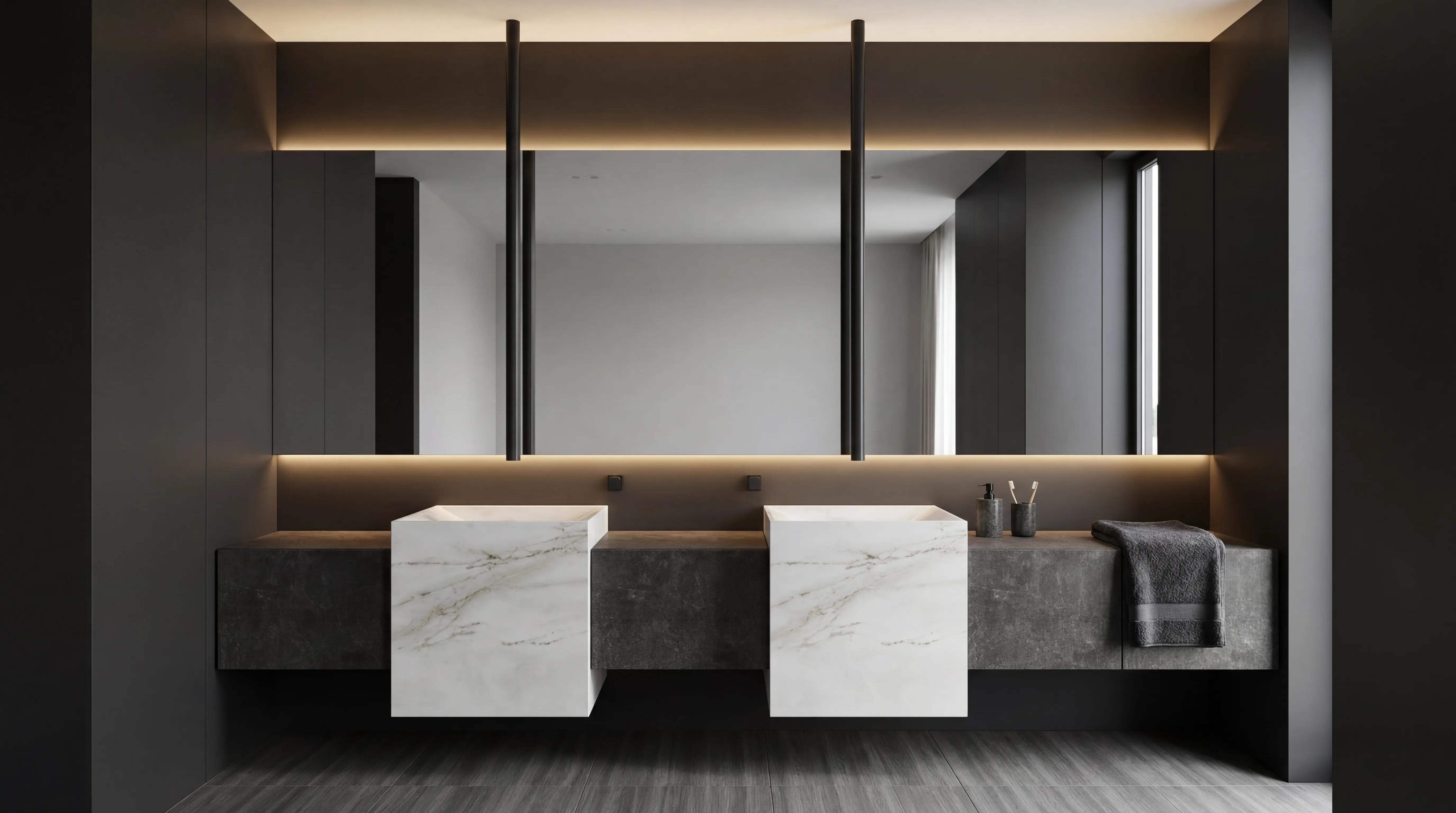
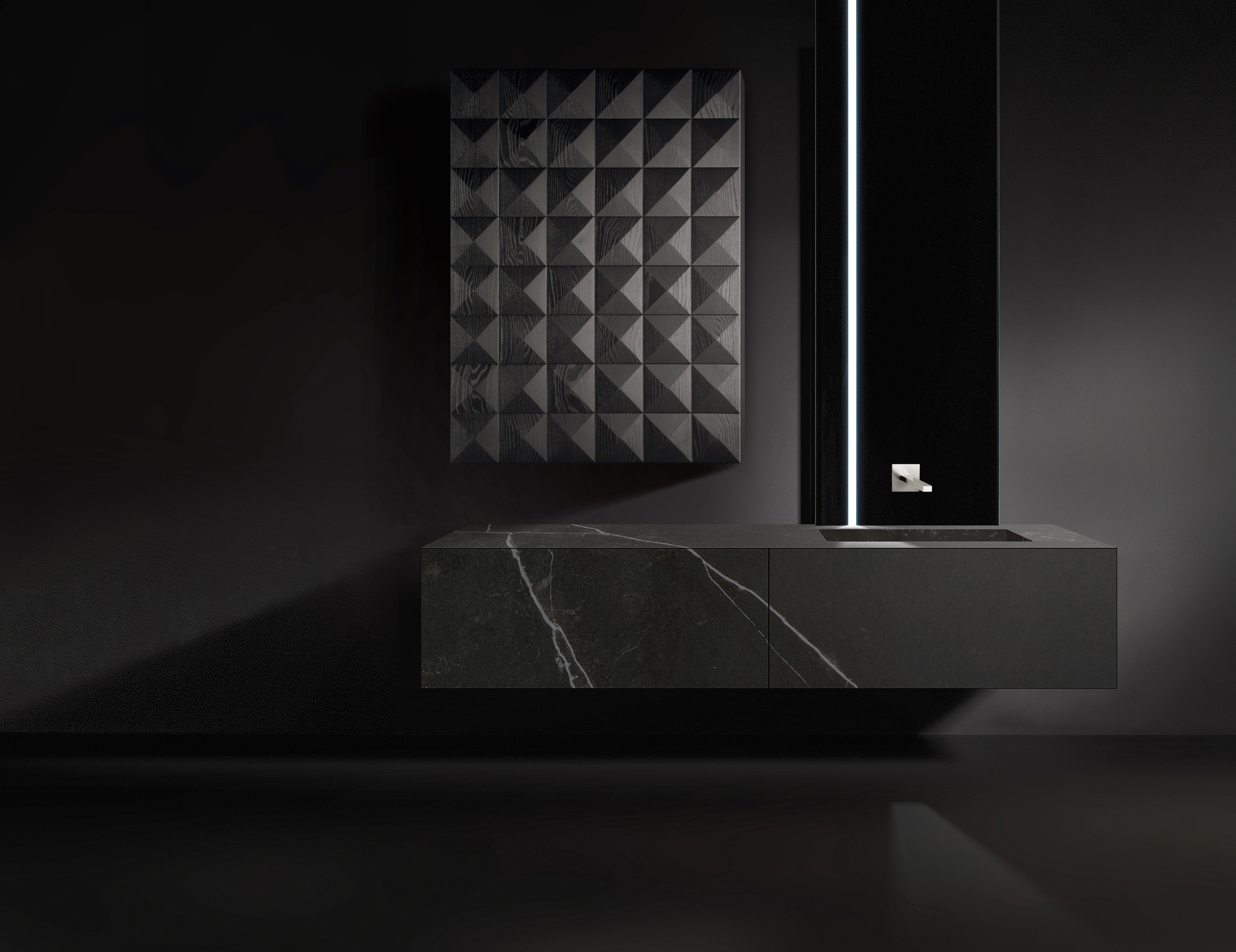
If you love a warm ambient glow, keep it — but layer it. Let the mood light be mood light, and make sure the working light that lands on the garments is neutral and color-accurate. This is the kind of detail that separates a considered closet from an expensive one, and it costs almost nothing to get right at the design stage and a great deal to retrofit later. The same logic applies at the vanity, where you judge tone against your own reflection.
A closet's real luxury is not the glow. It is walking out the door certain that the two dark things you put on this morning were always meant to be worn together. Light for the decision, not the atmosphere, and the room will finally do its one job.
Book a private showroom tour
If this changed how you are thinking about the closet, the next step is not another article. Book a private showroom tour and spend an hour with our design team, one on one, in one of our studios — from Buckhead to SoHo — where you can see how light, material, and cabinetry are resolved together rather than in isolation.