
Craft
The Built-In Outdoor Kitchen Is Built to Crack
The built-in masonry outdoor kitchen is sold as the forever build. In freeze-thaw country, it's the version most likely to crack. What lasts instead.
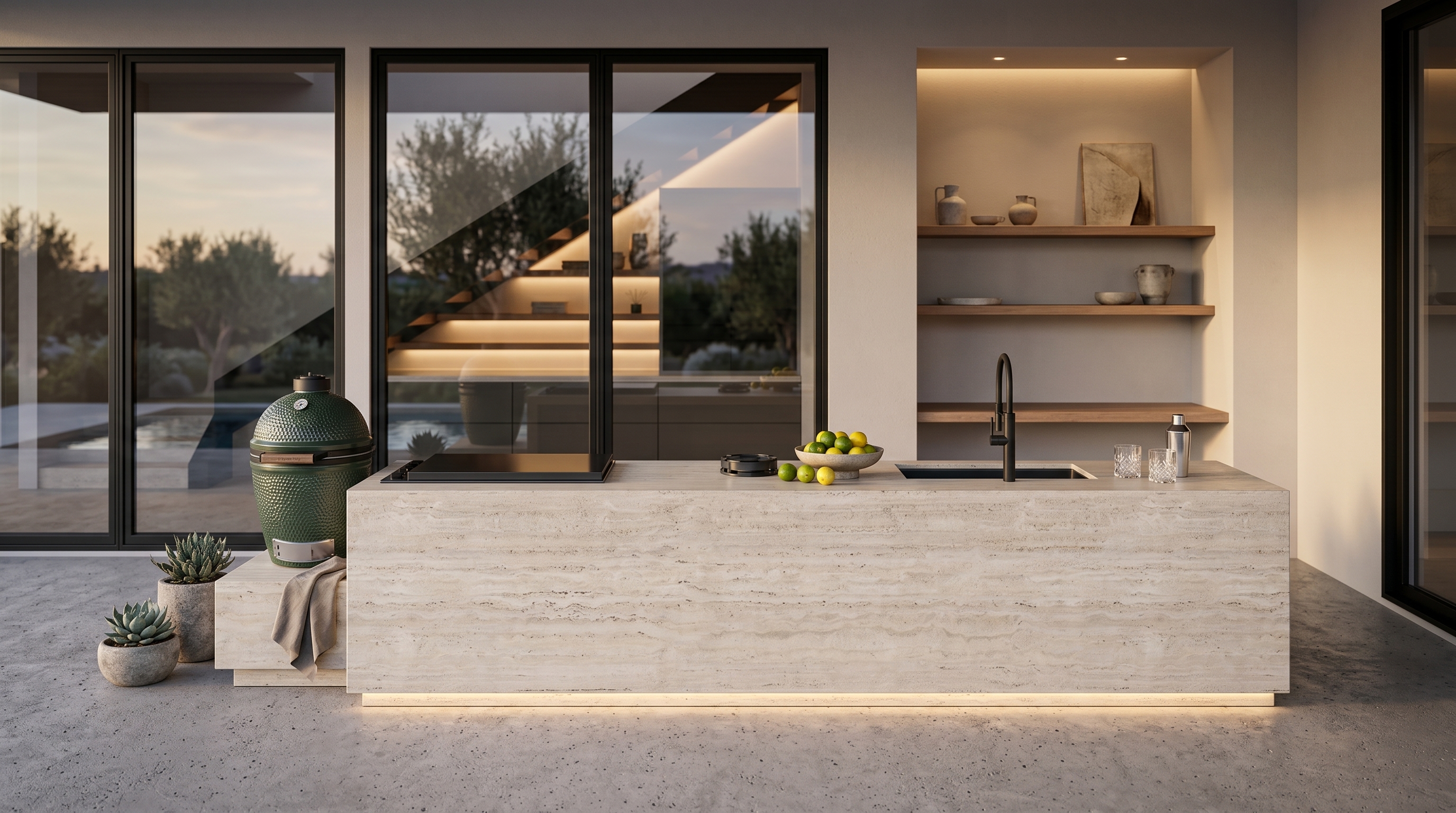
Nearly every outdoor kitchen sold today is described the same way: permanent, built from scratch, set in masonry, made to last a lifetime. The 2026 Houzz Outdoor Trends Study found that 95 percent of homeowners now build theirs from the ground up, and more than two-thirds run plumbing, electrical, or heating out to them. Permanence has become the whole pitch.
It is also the weakness.
A rigid masonry island is a structure in a quiet argument with the ground beneath it, and across most of the country the ground wins. The built-in outdoor kitchen isn't built to last. In freeze-thaw climates, it's built to crack.
The Ground Moves. Masonry Doesn't.
A footing in cold-weather country has to reach at least twelve inches below the frost line. Miss that, and the soil under one corner freezes, expands, and lifts that corner while the rest of the island stays put. Inspectors call it frost heave, and it does to a barbecue island exactly what it does to a house: cracks, a door that no longer latches, a countertop that stops sitting level. The footing rules that govern this are the same ones that keep a foundation standing, and a slab of stone poured on grade ignores every one of them.
Water Wins From the Inside
Concrete, brick, and stone are porous. They drink. When the water they have absorbed freezes, it expands by roughly nine percent, and when it thaws it doesn't shrink all the way back. Every cycle leaves the material a little looser than the last. The masonry trade puts the annual cost of freeze-thaw damage in the billions of dollars, and most of it stays invisible until a face of stone finally spalls off some morning in April. A built-in island in a four-season climate isn't aging gracefully. It's absorbing water and waiting for winter.
A Sealed Box Around a Gas Appliance
There is a second problem with the monolith, and it isn't cosmetic. Drop a gas grill or a burner into a sealed masonry enclosure and you have built a box that collects gas. Manufacturers require at least two vents in the island, low for propane because it sinks, high for natural gas because it rises, and on different walls so air actually crosses the cavity. The built-in that looks most seamless from the outside is often the one that quietly skipped them. Seamless masonry and a live gas line make a handsome box for collecting the one thing you never want collected.
What to Build Instead of a Monolithic Outdoor Kitchen
The alternative isn't a cheaper outdoor kitchen. It's a smarter structure. Build on a base engineered to move with the site instead of fighting it. Vent every appliance cavity on purpose. Choose a cabinet system built for weather rather than one troweled shut around your appliances and hoped for. An engineered BauTeam outdoor kitchen treats the island as a ventilated, drainable, serviceable system, so the grill can be pulled, the line can be reached, and the structure has somewhere to send water before it freezes. The goal was never less permanence. It's permanence that survives a winter.
The built-in island reads as the safe, forever choice precisely because it looks immovable. But nothing outdoors is immovable. The frost line, the soil, and the water inside the stone all move whether the island was designed to or not. Build the one that moves on purpose.
Book a Private Showroom Tour
If this changed how you're thinking about your outdoor kitchen, the next step isn't another article. Book a private showroom tour and spend an hour, one on one, with our design team, walking a real BauTeam outdoor system and pressure-testing it against your site, your climate, and the way you actually cook. Our showrooms run from Atlanta and Boston to Dallas, Las Vegas, and Los Angeles.