
Craft
The Outdoor Kitchen Refrigerator Is the First to Fail
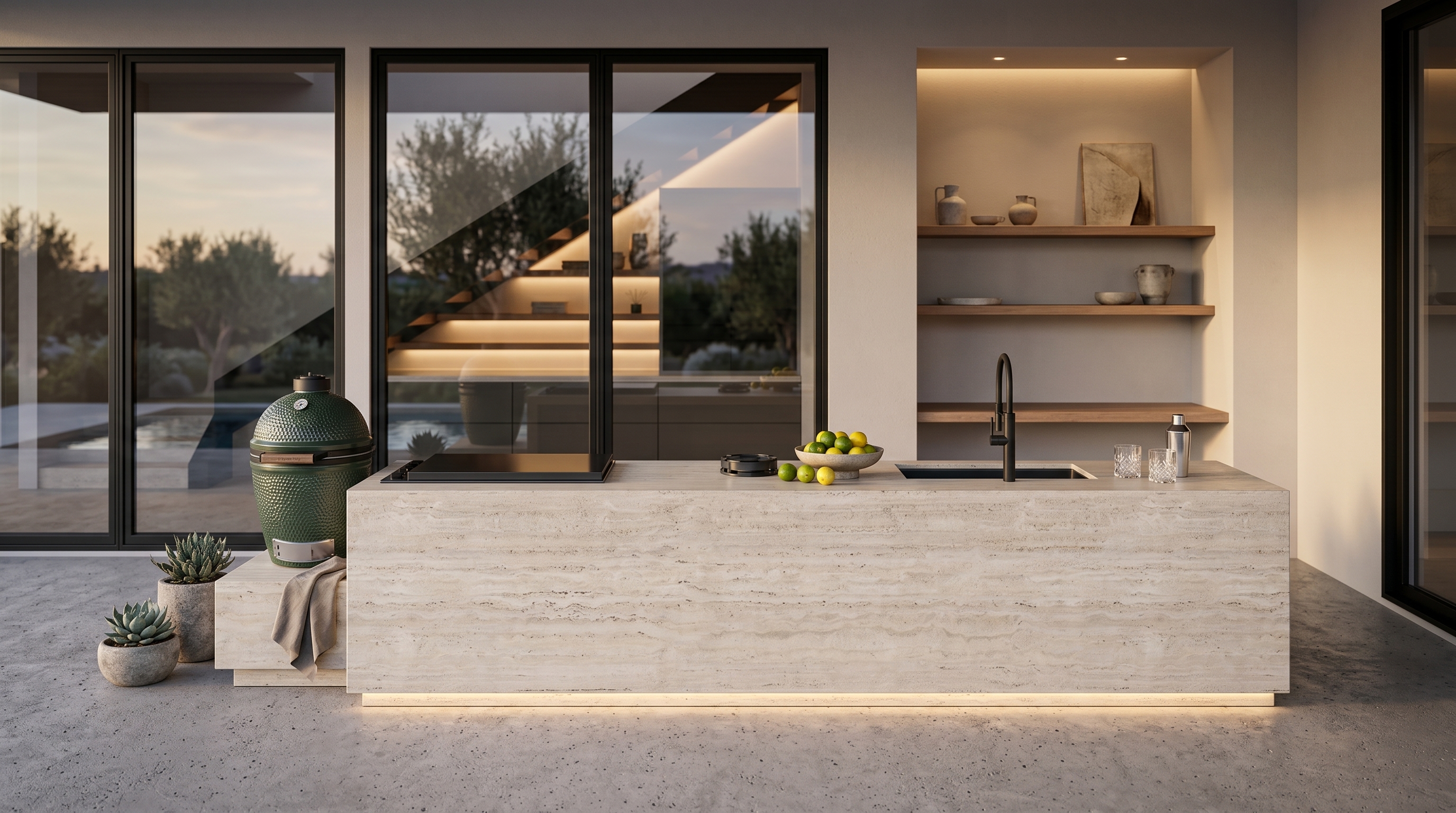
The built-in outdoor kitchen refrigerator reads as a must-have. It's also the first thing to fail — asked to hold 40°F while baking in the summer sun.
Walk any outdoor kitchen and the refrigerator is treated as a given. A serious build has one, sometimes two — beverage drawers under the counter, a full unit beside the grill, cold storage a few steps from the fire. It reads as completeness.
It is also, more often than not, the first thing to die.
An outdoor kitchen refrigerator is asked to do the one job it is worst equipped for: hold 40 degrees while sitting in the afternoon sun. The failure isn't a matter of if but of when, and it usually arrives in the third or fourth summer — quietly, right when the kitchen is being used most.
The physics are working against it
A refrigerator is a heat pump. It doesn't make cold; it moves warmth out of the box and dumps it into the surrounding air. The hotter that air, the harder the pump works and the less heat it can actually shed. Manufacturers rate most units to hold a safe, stable interior only up to roughly 100°F ambient. Push past 90°F and the compressor stops cycling and simply runs — continuously, through the hottest part of the day. A stainless cabinet in direct sun sits well above the air temperature around it. The one afternoon you most want a cold drink is the exact afternoon the box is least able to give you one.
This is a food-safety problem before it's a comfort one. The FDA is blunt about the number: cold storage has to hold at or below 40°F, and once food climbs into the range between 40 and 140°F it becomes unsafe in about an hour when it's over 90 degrees out (FDA, Refrigerator Thermometers). A fridge that can't keep 40 in July isn't underperforming. It's not doing the job at all.
An indoor fridge outdoors is a warranty you already voided
The tempting shortcut is to drop a cheaper indoor undercounter unit into the cabinet run. It fails on paper before it fails in fact. Indoor refrigerators aren't sealed against moisture, aren't built for the daily temperature swing, and their electrical components aren't certified for the wet. Most manufacturers won't honor a warranty the moment the unit lives outside. A genuinely outdoor-rated refrigerator — sealed electricals, corrosion-resistant interior, certified for outdoor use — solves the durability question honestly, and roughly doubles the price of the component most likely to break anyway.
The outdoor kitchen refrigerator is the wrong place to overspend
Every outdoor kitchen has a hierarchy of things that last. The substructure, the cabinetry material, the countertop, the ventilation around the grill — these are decade problems, and they are the ones worth over-specifying. The refrigerator is a five-to-eight-year appliance at best and a two-year appliance at worst, and it is the single element most exposed to the two forces that age an outdoor kitchen fastest: heat and water. Treating it as permanent, and spending on it accordingly, is a category error dressed up as generosity.
What to build instead
Start by asking whether cold needs to live outside at all. In most homes the kitchen door is fifteen steps away, and a staging refrigerator just inside it holds more, runs efficiently, and never sees the sun. Outdoors, keep the cold minimal and honest: insulated drawers for a session's worth of drinks, filled before guests arrive — not a full pantry pretending to be a second kitchen.
If a built-in unit genuinely earns its place, site it out of the western sun and never in an uninsulated cabinet that bakes. Put it on the shaded side of the run, under cover, with its front ventilation clear. Buy only a unit explicitly certified for outdoor use, and read the ambient temperature rating before you read the brochure. Then take the money you saved and put it into the parts of the kitchen the weather can't reach — which is how we think about outdoor kitchens in the first place.
The point
The best outdoor kitchens aren't the ones with the most cold storage. They're the ones that put cold where cold survives and spend the budget on what the weather can't touch. A refrigerator baking beside the grill isn't a luxury. It's a repair order with a delivery date.
Book a private showroom tour
If this changed how you're planning your outdoor kitchen, the next step isn't another article. Book a private showroom tour and spend an hour with our design team, one on one — walking the materials, the layouts, and the decisions that determine whether a kitchen still works in twenty years. Our showrooms, from Atlanta to New York, are built for exactly this kind of conversation.